
137. MAI MURAGUCHI: A SPACE BETWEEN ENQUIRY AND RESISTANCE.
Bamboo Progettazione? — Tsung-Yeh Arts and Cultural Center, Madou, Tainan - TAIWAN.
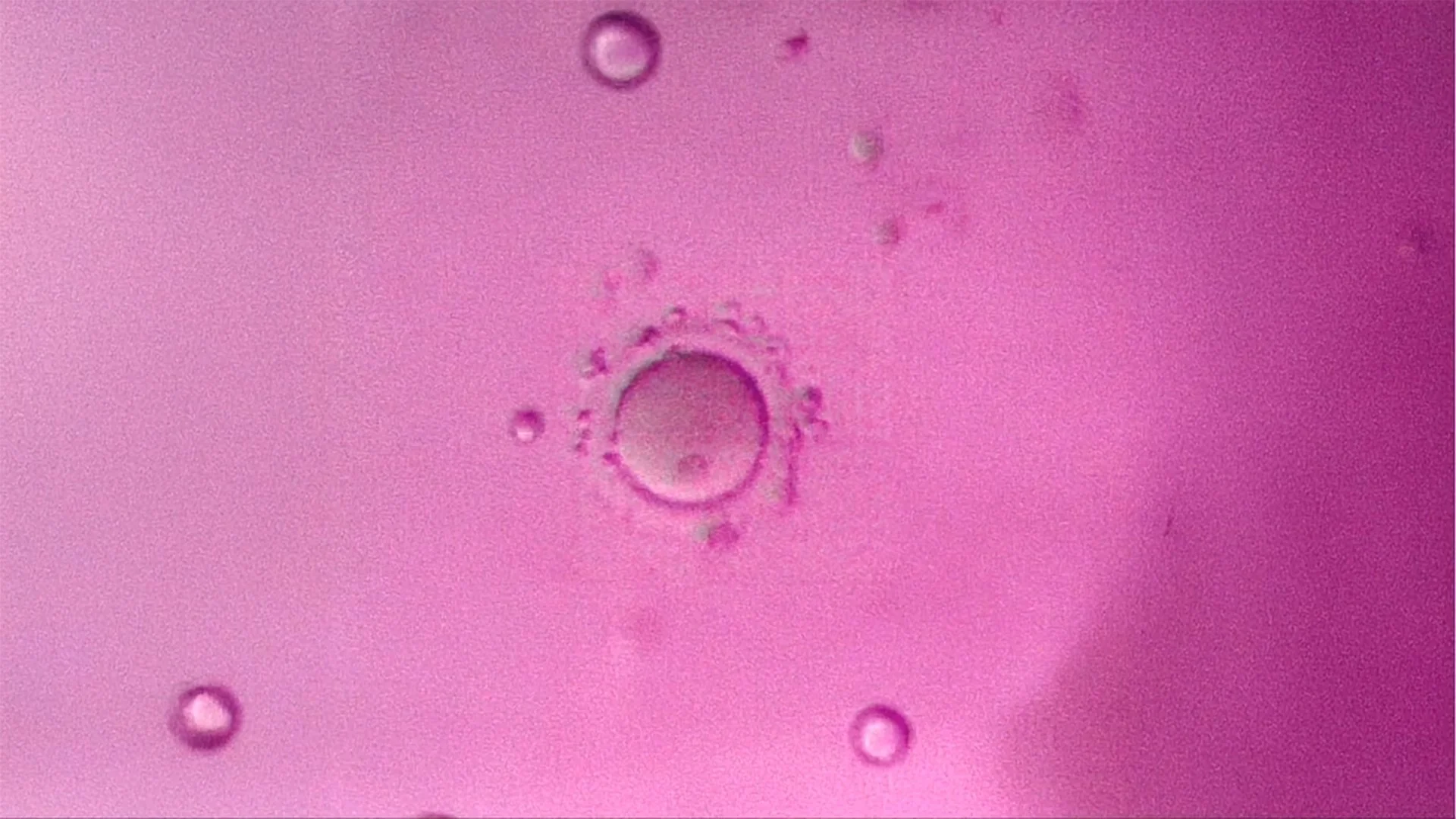
Mai Muraguchi, ‘HELLO, MY EGG NO.1’, 2025. Image courtesy of the artist.
‘My practice attempts to visualise the violence that arises within a community. In such a community, expressing one's opinion may be suppressed by unconscious pressure, or speaking out may destabilise one's position. Under such conditions, silence is not merely a passive choice, but almost the only remaining form of action.’ M.M.
Please can you introduce work made for Bamboo Progettazione?
この作品は、揺れ続ける大型の竹の立体インスタレーションです。構造体は自立しながらも、常にわずかな不安定さを孕み、「起き上がりこぼし」のように外部からの力に応答して反復的に動き続けます。その運動は、均衡が保たれているように見える状態の内部に潜む緊張を可視化します。
本作は、台湾の Tainan Bamboo Society に所属する竹職人との協働によって制作されました。キュレーターの Mankit Auyeung の構想のもと、Enzo Mari が1974年に発表したマニフェスト『Autoprogettazione?』を、台湾の竹工芸という素材と技術を通して再考し、「二重の作者性」という関係性のモデルを提示する試みとして生まれました。そこでは、デザインの意図と職人の身体的知識が交差し、単一の主体では成立しない構造が立ち上がります。
私は制作を始める際、自身の経験や感覚の共通点を出発点とします。Mari が「作ること」を通して問いかけたのは、ある立場や形式を正しいものとして安心してしまう状態そのものへの批評だったのではないかと考えました。この作品もまた、制度や共同体が本当に「安全な空間」として機能しているのか、それとも単に形態として維持されているにすぎないのかを問いかけています。
外側の構造が保たれていることと、内部が守られていることは同義ではありません。作品は壁への衝突や、複数の鑑賞者が異なる方向から同時に力を加えることによって大きく揺さぶられます。そのとき内部に蓄えられていた羽は、籠の隙間から外部へと散乱していきます。ここで露わになるのは構造の強度ではなく、「何がどのような条件のもとで守られているのか」という問いです。
竹の構造体は倒れることなく運動を続けます。しかしその反復のなかで、内部に保たれていたものは外部環境へと曝され、徐々に、あるいは一瞬で失われていきます。観客の身体的な介入を通して、このインスタレーションは心理的・社会的な安全性がいかに脆弱な均衡の上に成立しているのかを示します。それは、圧力に耐え続ける構造の内部で、最初に守られなくなるものは何かを問いかける装置でもあります。
This work is a large, continuously swaying, three-dimensional bamboo installation. While the structure is self-supporting, it constantly harbors a slight instability, moving repeatedly in response to external forces like a roly-poly toy. This movement visualises the tension lurking within a seemingly balanced state.
This work was created in collaboration with bamboo artisans belonging to the Tainan Bamboo Society in Taiwan. Under the conception of curator Mankit Auyeung, it re-examines Enzo Mari's 1974 manifesto, "Autoprogettazione?", through the lens of Taiwanese bamboo craftsmanship, attempting to present a model of a "dual authorship" relationship. In this work, the design intent and the artisan's physical knowledge intersect, resulting in a structure that cannot exist through a single subject.
When I begin creating, I start with commonalities in my own experiences and sensibilities. I believe that what Mari questioned through "making" was a critique of the very state of comfort we feel when we accept a certain position or form as correct. This work, too, questions whether institutions and communities truly function as "safe spaces," or whether they are merely maintained as forms.
The preservation of the external structure is not synonymous with the protection of the interior. The work is shaken violently by collisions with the wall and by multiple viewers applying force from different directions simultaneously. At that moment, the feathers stored inside scatter out through the gaps in the cage. What is revealed here is not the strength of the structure, but the question of "what is being protected and under what conditions?"
The bamboo structure continues to move without collapsing. However, in the course of this repetition, what was preserved within is exposed to the external environment and lost gradually, or even instantaneously. Through the physical intervention of the audience, this installation demonstrates how precarious the balance of psychological and social safety is. It is also a device that asks what is the first thing to be lost within a structure that continues to withstand pressure.
You appear to explore a specific position of contradiction within your practice, to pivot between enquiry and resistance, an urgency to be seen and a specific sense of pulling back. Works which invite collaboration from the public seem to push this point, please can you discuss your position as an artist within what you have made and what the works tell you?
私の実践はしばしば、身体や社会的な振る舞いを形づくる構造を理解しようとする衝動と、そこから距離を取ろうとする抵抗のあいだを揺れ動いています。私にとって「見られること」は、存在を認識されるために必要であると同時に、曝露や統制の危険を伴うものでもあります。私は、共同体の中で無意識の抑圧が働き、目立つことや自分の意見を強く表明することが好ましくないとされる文化的な環境の中で育ってきました。そのような状況では、可視的になることは単なる自己表現ではなく、周囲からの批判や非難を引き受ける行為にもなり得ます。
こうした経験は、社会の構造を理解しようとする探究の姿勢と、そこに完全には同調しない抵抗の感覚の両方を私の中に生み出してきました。私の作品は、そのどちらかの立場を選び取るのではなく、そのあいだに生じ続ける緊張や揺らぎの状態そのものを提示しようとする試みだといえると思います。
観客の参加を促す作品は、単に作品を開くための方法ではありません。むしろ、人と人との関係が常に交渉され続けている状態を可視化する試みだと考えています。参加という行為は緊張を解消するのではなく、むしろその場に潜んでいる視線や力関係を浮かび上がらせることがあります。観客は見る側であると同時に見られる側にもなり、触れることや選択することを通して、自らの立場を意識することになります。
制作の過程で私は、作品から試されているように感じることがあります。どこまで自分を差し出すのか、なにを守ろうとしているのか、そしてどのように沈黙を破るのか。
このように、探究と抵抗のあいだを揺れ動く状態は、解決すべき矛盾ではなく、私が身を置いている状況のようなものです。
My practice often fluctuates between the urge to understand the structures that shape our bodies and social behaviours, and the resistance to distance ourselves from them. For me, "being seen" is both necessary for my existence to be recognised and carries the risk of exposure and control. I grew up in a cultural environment where unconscious repression was at work within the community, and standing out or strongly expressing one's opinions was considered undesirable. In such a situation, becoming visible can be not merely self-expression, but also an act of accepting criticism and condemnation from those around you.
These experiences have given rise to both a desire to explore and understand the structures of society, and a sense of resistance that does not fully conform to them. I believe my work is an attempt to present the state of tension and fluctuation that constantly arises between these two positions, rather than choosing one over the other.
Works that encourage audience participation are not simply a way to open up the artwork. Rather, I see them as an attempt to visualise the state in which relationships between people are constantly being negotiated. The act of participation doesn't relieve tension; rather, it can bring to light the gazes and power dynamics lurking within the space. The audience becomes both the observer and the observed, and through touching and making choices, they become aware of their own position.
During the creative process, I sometimes feel as if I'm being tested by the artwork itself. How much of myself will I offer? What am I trying to protect? And how will I break the silence?
This state of wavering between exploration and resistance isn't a contradiction to be resolved, but rather a reflection of the situation I find myself in.
Viewing certain works, there is a repeated sense of holding breath, a sense of anticipation, as to be confronted and to witness an event. Do you feel a sense of catharsis from the creation of your works?
私の作品から、息を止めているような緊張感を感じ取っていただけたことをとても嬉しく思います。それはおそらく、私自身がこれまでに経験してきた感覚が、作品を通して現れているからだと思います。
私の実践は、ある共同体の中で生じる暴力性を可視化しようとするものです。そこでは、自分の意見を表明することが無意識の圧力によって抑えられていたり、発言することで自身の立場が不安定になる状況が生まれることがあります。そのような条件のもとでは、沈黙は単なる消極的な選択ではなく、ほとんど唯一残された行為の形となります。
結果として、当事者でありながらも状況の変化をただ見続けることしかできない状態が生まれます。私はこのような「関わりながらも介入できない感覚」や、「出来事の内部にいながら外側に立たされるような状態」に強い関心を持っています。
制作がカタルシスかと問われると、私の場合、それは必ずしも感情の解放ではありません。むしろ制作の過程は、緊張や不安定さを消化するためのものではなく、それらがどのように身体や空間の中に持続しているのかを観察し、形にしていく行為に近いと感じています。作品を作ることで何かが終わるのではなく、むしろ別の問いや感覚が新たに生まれてくることの方が多いのです。
その意味で、私にとって制作は癒しや浄化というよりも、まだ言葉になっていない状態や、解決されていない力の関係を可視化し続けるためのプロセスだと言えるかもしれません。作品の中に保たれている緊張は、私自身の内側にあるものでもあり、同時に社会や他者との関係の中で共有されるものでもあると感じています。
I am very pleased that you felt a taking-of-breath tension in my work. This is probably because the feelings I have experienced myself are reflected in my work.
My practice attempts to visualise the violence that arises within a community. In such a community, expressing one's opinion may be suppressed by unconscious pressure, or speaking out may destabilise one's position. Under such conditions, silence is not merely a passive choice, but almost the only remaining form of action.
As a result, a state is created where one, despite being a participant, can only continue to observe the changing situation. I have a strong interest in this "feeling of being involved but unable to intervene," and "being inside an event while standing on the outside."
When asked if my creative process is cathartic, I would say that for me, it's not necessarily about the release of emotions. Rather, I feel that the creative process is not about digesting tension or instability, but rather about observing how those feelings persist within my body and space, and then giving them form. Creating a piece doesn't bring something to an end; rather, it often gives rise to new questions and feelings.
In that sense, for me, creation is less about healing or purification, and more about continuously visualising states that haven't yet been put into words, and unresolved power dynamics. I feel that the tension preserved within my work is both something within myself and something shared within my relationships with society and others.
The sense of particles within your work really fascinates me, tiny bubbles, sand grains, the works made with cosmetics. Please can you contemplate the sense of particles within your practice?
「粒子」という視点から私の作品を捉えていただいたことは、とても興味深く感じました。正直に言うと、これまで自分の実践をそのような視点で意識的に考えてきたわけではありません。私が一貫して関心を持ってきたのは、無意識の暴力性、そして緊張が保たれている状態や、不安定な均衡の中で内部に留められていたものが外へと漏れ出してしまうような瞬間です。
ただ、あらためて振り返ってみると、砂や粉、ガラスの中の小さな気泡、あるいは化粧品のような微細な素材が作品の中に繰り返し現れているのは事実だと思います。それは「粒子」という概念を意識して選んでいたというよりも、自分が扱いたい感覚や状況に近づこうとする過程の中で、結果的にそうした素材に引き寄せられていたのかもしれません。
例えば、砂や粉は、触れたり動かされたりすることで容易に拡散し、境界を曖昧にします。粒子はそれ自体が非常に小さく、単独では脆く見える存在ですが、同時に集まることで環境や身体、社会的な表面を形づくる力を持っています。その両義的な性質に強く惹かれているのかもしれません。
I found it very interesting that you viewed my work from the perspective of "particles." To be honest, I haven't consciously considered my practice from that perspective until now. My consistent interest has been in unconscious violence, states of tension, and moments when things that were contained within an unstable equilibrium leak out.
However, looking back, it's true that sand, powder, tiny bubbles in glass, or microscopic materials like cosmetics repeatedly appear in my work. Rather than consciously choosing these materials with the concept of "particles" in mind, it might be that I was drawn to them as a result of trying to approach the sensations and situations I wanted to address.
For example, sand and powder easily disperse when touched or moved, blurring boundaries. Particles themselves are extremely small and appear fragile on their own, but at the same time, when they gather together, they have the power to shape the environment, the body, and social surfaces. Perhaps I am strongly drawn to this ambiguous nature.
I appreciate that the last few years have been an intense period of learning for you, please can you identify the pivotal moments within this time?
この数年間は、私にとってとても重要な時期だったと感じています。もともと私は日本で長くデザインの仕事に携わっており、アートに関しては独学で勉強してきました。日本の美術館で目にする展示は、工芸作品や近代西洋絵画が中心となることが多く、美術の受容のあり方にはある種の偏りがあるようにも感じていました。そのような環境から離れ、ロンドンに拠点を移し、日常的に数多くのアートに触れられる環境になったことが最初の大きな転機だったと思います。
特にロンドンでの経験は、現在の実践の基盤を形づくる重要な時間でした。自身の身体的な記憶や社会的な経験を出発点にしながら、自分が置かれてきた状況や、無意識の暴力性といったテーマに向き合うことで、関心の輪郭が徐々に明確になっていきました。
また、文化的に同質性の高い環境の中で育ってきた自分が、多様性に満ちた環境でさまざまな背景を持つ人々と出会い、交流する機会を得たことも大きな影響を与えたと感じています。それは、自分でも意識していなかった前提や価値観に気づき、自分に影響を与えてきた社会構造をあらためて問い直すきっかけとなりました。それまで独学で勉強してきたことが、ここでの経験を経て点が線に繋がっていったように感じています。
I feel that these past few years have been a very important period for me. Originally, I had worked in design in Japan for a long time, and I had studied art on my own. The exhibitions I saw in Japanese museums often focused on crafts and modern Western paintings, and I felt that there was a certain bias in how art was received. Leaving that environment and moving to London, where I was able to be exposed to a wide variety of art on a daily basis, was the first major turning point for me.My experience in London, in particular, was a crucial time in shaping the foundation of my current practice. Starting from my own physical and social memories, confronting themes such as the circumstances I've been in and unconscious violence gradually clarified the contours of my interests.
Furthermore, having grown up in a culturally homogeneous environment, having the opportunity to meet and interact with people from diverse backgrounds in a highly diverse environment had a significant impact. It made me aware of assumptions and values I hadn't consciously considered, and prompted me to re-examine the social structures that had influenced me. I feel as though the things I had studied independently up to that point finally connected through these experiences.Bamboo Progettazione? — Until April 26, 2026 at Tsung-Yeh Arts and Cultural Center, Madou, Tainan, Taiwan.