
130. GEORGES SEURAT: A SPACE BETWEEN POPULOUS AND LONE.
Radical Harmony, Helene Kröller-Müller's Neo-Impressionists. National Gallery - LONDON.
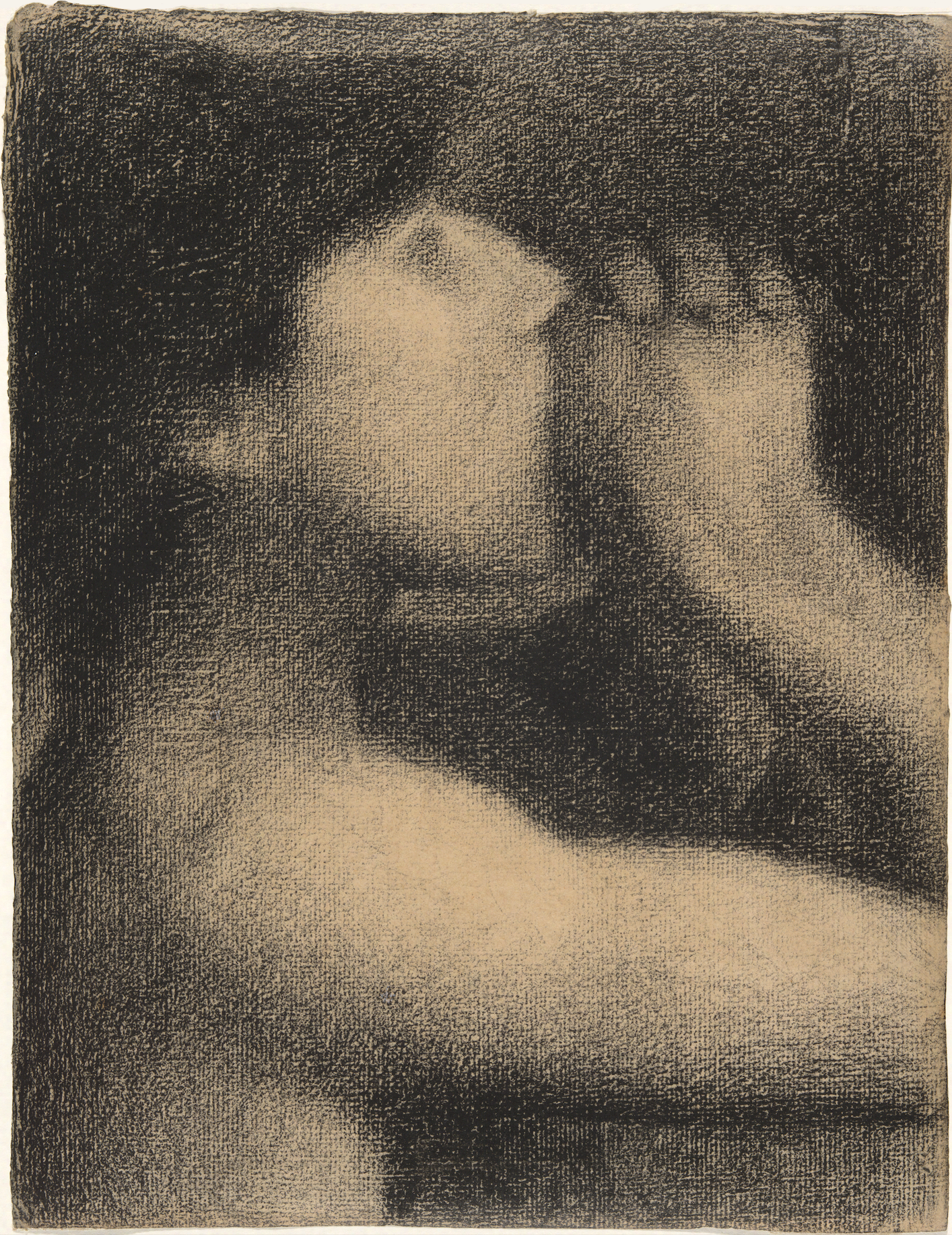
Georges Seurat,'D'écho', (Study for Une baignade, Asnières).(Bathers at Asnieres) 1859-9. Conté crayon on paper. Yale University Art Gallery. Published within M-A (A SPACE BETWEEN) issue 4.
Images as visions - cloudy as to wake from a daydream, as pupils constrict into focus. Graphite grazes a surface - evoking impressions of the familiar - silhouetted forms, hazy as to be sculpted by light and air. Seurat informs his studies with information without annotation; his porous approach is gentle as to caress yet evidential as to contribute to a greater whole, made within the continuous evolution of discovery, awe-struck with a sensorial ability to communicate with the very fibre of life.
To contemplate as to be a pixel, a glitch within a system - overwhelmed with mechanised speed. A formed society, collectively concerned, faced the forest away from the factory. To tread within a world seemingly blanketed in snow, so deep as to muffle sound, and dapple an impression within the nature of a newfound page. The micro dot appears as if from the lens of the magnified specimen, of a feathered tuft, as a skin's pore, as to stare as if for the first and last time simultaneously.
Seurat’s loyal thoughts return to values treasured by workers, whose lives are monitored by others, within systems that allocate time, governed by profit. The artist’s depictions of the resting, the unposed, the staring into space - hark back to a nature poised within a pecking order - alert to position and weary of the continuum of labour. His punctum portraits of atmospheres held as a drop on the brink of falling - mediate conditions ahead of definition - they focus on time of day, tides and breath - as a clock face whose hands are removed to reimagine a life which does not tick - rather pulse.
A collective technique, a shared philosophy, articulated and furthered by comrades of painters - exploring the iconography of pointillism - expressed within an undulation of responses. As a musician writes a score - a proposal of sound read in silence, so too do the Neo-Impressionists present works which await reading, translating marks made en masse to encapsulate a gesture.
Paintings further evoke a collective sense of the organic, unfathomable power of the natural world, within the overpainting of frames which appear to shimmer as reflections from a water's surface. Are we looking at an impression of nature, or are we viewing a prayer, a moment held, as a memory.
Seurat's radical sense of reduction appears amorphous as to be hewn from stone, his objects and crowds suggest a sense of searching, scanning for information, so that forms uncloud as architecture, pronounced as structures seemingly familiar yet distant from view. As to return to an ideology which prioritises the fleeting over the fixed. As to harmonise within a collective spirit of visual voices, a choir as opposed to a soloist.
And it is within this idea that denotes Seurat's influence as perpetually modern, his work is shared both with the unnamed souls he depicts and also as a member of the Neo-Impressionists to whom he belongs, collectively believing in furthering the populous than the lone.
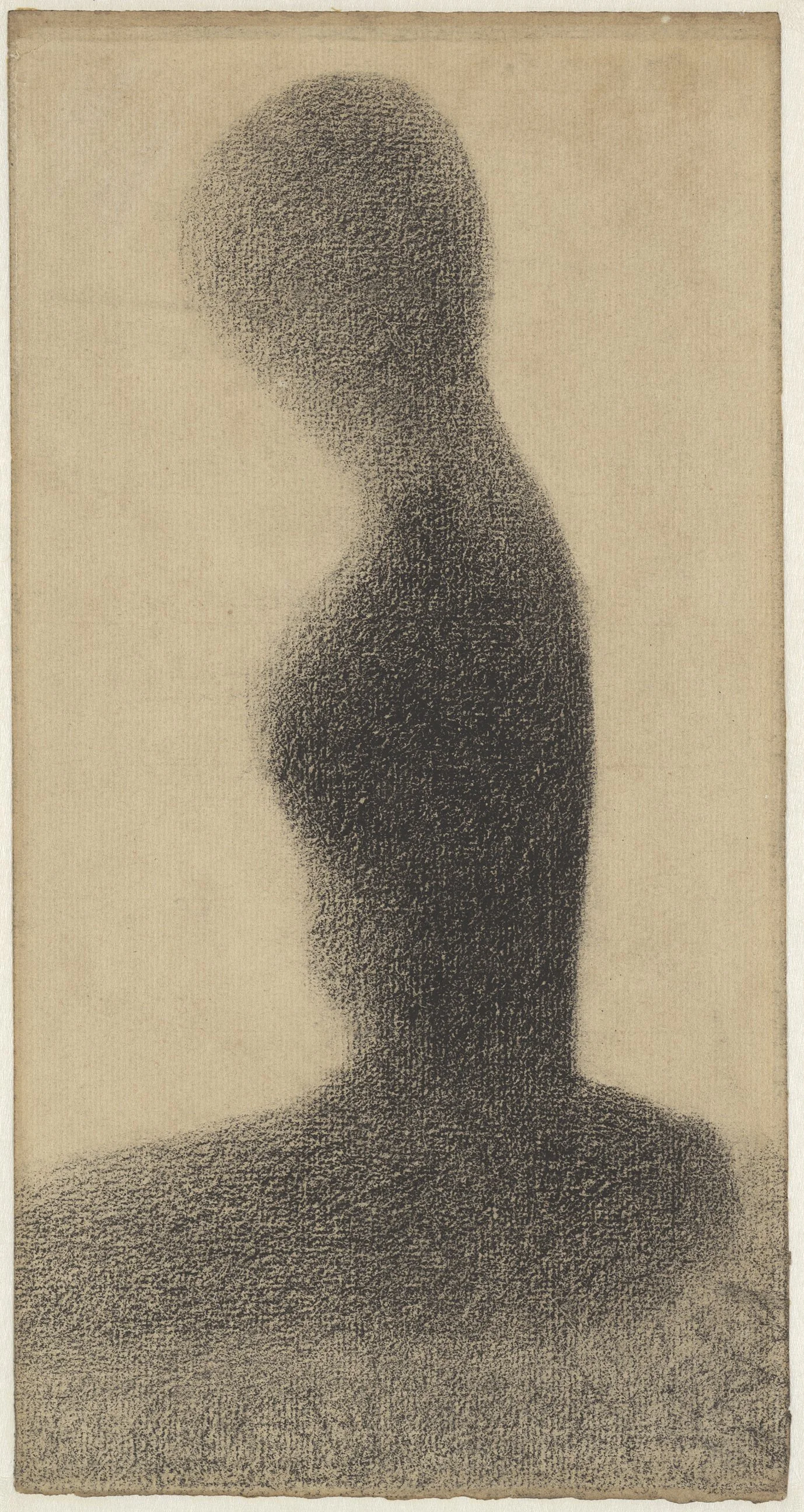
‘Young Woman: Study for ‘A Sunday on La Grande Jatte’, 1884-5. Conté crayon on paper, Kröller-Müller Museum, Otterlo, The Netherlands. Acquired with support from the Rembrandt Association.
Radical Harmony, Helene Kröller-Müller's Neo-Impressionists. National Gallery, London. Until 8 February 2026.
With Thanks to Neil Evans.
A series of works by Georges Seurat are published within the 4th issue of M-A (A SPACE BETWEEN), available while stocks last.