
PREVIEW
Light and Magic, The Birth of Art Photography, Tate Modern - London.
Interview with curator Genevieve Barton.

Ho Fan, Smoky World 1959. M+, Hong Kong © Estate of Ho Fan. Courtesy Tate.
‘Pictorialism lies in its fundamental redefinition of photography as an artistic medium. At a time when photography was often understood primarily as a means of mechanical reproduction or documentary record, pictorialists asserted the camera could be used to express subjective experience, evoke emotion, and create images with the same aesthetic ambition as painting and drawing.’ Genevieve Barton
Please will you introduce what pictorialism is and how this medium sits within the exhibition 'Light and Magic'?
Pictorialism in the simplest terms is a photography movement emerging in the 1880s that aimed to position photography as an art form. The pictorialists sought to place photography on the same level as other fine arts such as painting and sculpture. The medium held a distinct and individual vision with each artist in the show creating exquisitely rendered images with technical skill and expressive artistry, many of whom mastered different darkroom processes. You’ll see so many photographs in ‘Light & Magic’ that were made with creativity, experimentation and intention. For a long time, this important movement has too often been narrated through a limited geography and a restrictive chronology and we, as curators, have engaged with this legacy to bring an expanded international representation to the public for the first time.
It is intriguing to consider how photography as a medium holds a sense of artistic ambition... The release of a moment held within a document - which historically and today is still expressive of a singular moment witnessed and what this tells us of a society. What do you feel the exhibition as a whole represents conceptually?
It’s really exciting to think about the ways these photographers changed the landscape of the medium at the turn of the twentieth century. Photography is unbelievably ubiquitous nowadays, but it was still a very young technology at the time the pictorialists started. The exhibition expands the history of pictorialism, aligning with our commitment to a much more transnational narrative and rethinking modernist foundations. We really want to show how conversations between artists transgress national boundaries, and that there were always interconnected networks of photographers, and indeed artists generally, that shared ideas, experiences and opportunities with each other.
I am very interested in the metaphor of reframing - to take an image and see it outside of a context, of possibly what it directly represents, and how quickly, how subtley a collective atmosphere can be formed from repositioning a combination of images. Please will you introduce the process in deciding upon the curation of this exhibition.
For us, the curatorial process began with the idea that Pictorialism was not a single, fixed movement, but a network of artists exchanging ideas across different places and contexts, globally. As curators we are essentially translating a selection of artworks into a compelling story and chose works not only for their individual qualities, but also for the conversations they could create with one another—through shared subjects, atmospheres, techniques and approaches to light. Organising the exhibition into thematic sections rather than chronologically was crucial. Bringing photographs from different geographies and periods into proximity allows familiar images to be seen afresh, while revealing connections that conventional national or chronological histories can obscure. We wanted to create a shift in scale, tone and process to create visual rhythms and invite visitors to make their own associations. In that sense, reframing operates on two levels. We are reconsidering the established history of the movement by presenting it as an international and interconnected movement, while also using the physical relationships between works - as art objects - to show how meaning can change when an image enters a new constellation.
Within some systems and platforms, the notion of photography as a legitimate art form is still charged with contradictory opinion. How does this exhibition address and consider this?
As mentioned, pictorialists really believed the photos they were making were art objects in their own right. The works are very porous things that speak to so many different ideas, elicit so many varying emotions and really strike a chord on a material level too. The physicality of the print is hugely important for this show. We’d love for visitors to get close to the works and engage with the material qualities of each photo. Near the middle of the exhibition, we have included 4 prints made using different techniques that visitors can pick up and handle, without glass or Perspex obscuring the view. I hope audiences are inspired by the beautiful textures and painterly effects, and it opens a world of understanding and appreciating photography as a legitimate art form.
I remember reading how particular the relationship between Helmut Newton and the technicians who developed his images was. The sensitivity to developing photography is such a scientific process while also requiring a nuanced understanding of instinct - all achieved within the dark. Please will you discuss the reference to 'the dark room' within the exhibition?
Offering visitors a chance to engage with the varied printing processes pictorialists used, we have built a working darkroom in the exhibition. I am so thrilled this exists as part of the show - it really homes in on the importance of the darkroom. Long before digital cameras and editing software existed, the darkroom was at the heart of photography and was central to many of the pictorialists’ practices. Through a blend of science, craft and creativity, photographers transformed light into lasting images by hand. They set darkrooms up anywhere – in their homes, at university or in spaces designated to camera club activity. Bathed in the glow of red safelights, photographers worked in near darkness to create and perfect their prints.
We have invited The Sustainable Darkroom to produce a series of workshops in collaboration with Tate, focussing on introducing different processes to visitors. The aim was to allow audiences to work with historical techniques but also to show them new, sustainable ways to create prints like cyanotypes that use waste materials such as coffee grounds or tea.
What do you feel the legacy of Pictorialism is?
The legacy of Pictorialism lies in its fundamental redefinition of photography as an artistic medium. At a time when photography was often understood primarily as a means of mechanical reproduction or documentary record, pictorialists asserted the camera could be used to express subjective experience, evoke emotion, and create images with the same aesthetic ambition as painting and drawing.
What is particularly remarkable is their willingness to fervently experiment with the medium itself. Through soft focus, carefully constructed compositions, and innovative printing processes, the pictorialists challenged the assumption that photography’s value resided in its ability to record the world with absolute clarity. Instead, they demonstrated photos can be interpretative, expressive, and deeply personal. Their legacy is also evident in the questions they raised about the relationship between technology and art, and about what distinguishes photography from other artistic practices which feels particularly pertinent today!
Ultimately, I see pictorialism as pivotal in the history of photography: it helped establish the medium’s artistic legitimacy while opening possibilities that photographers continue to explore today. Also demonstrating photography’s power to develop its own beautifully distinctive language.
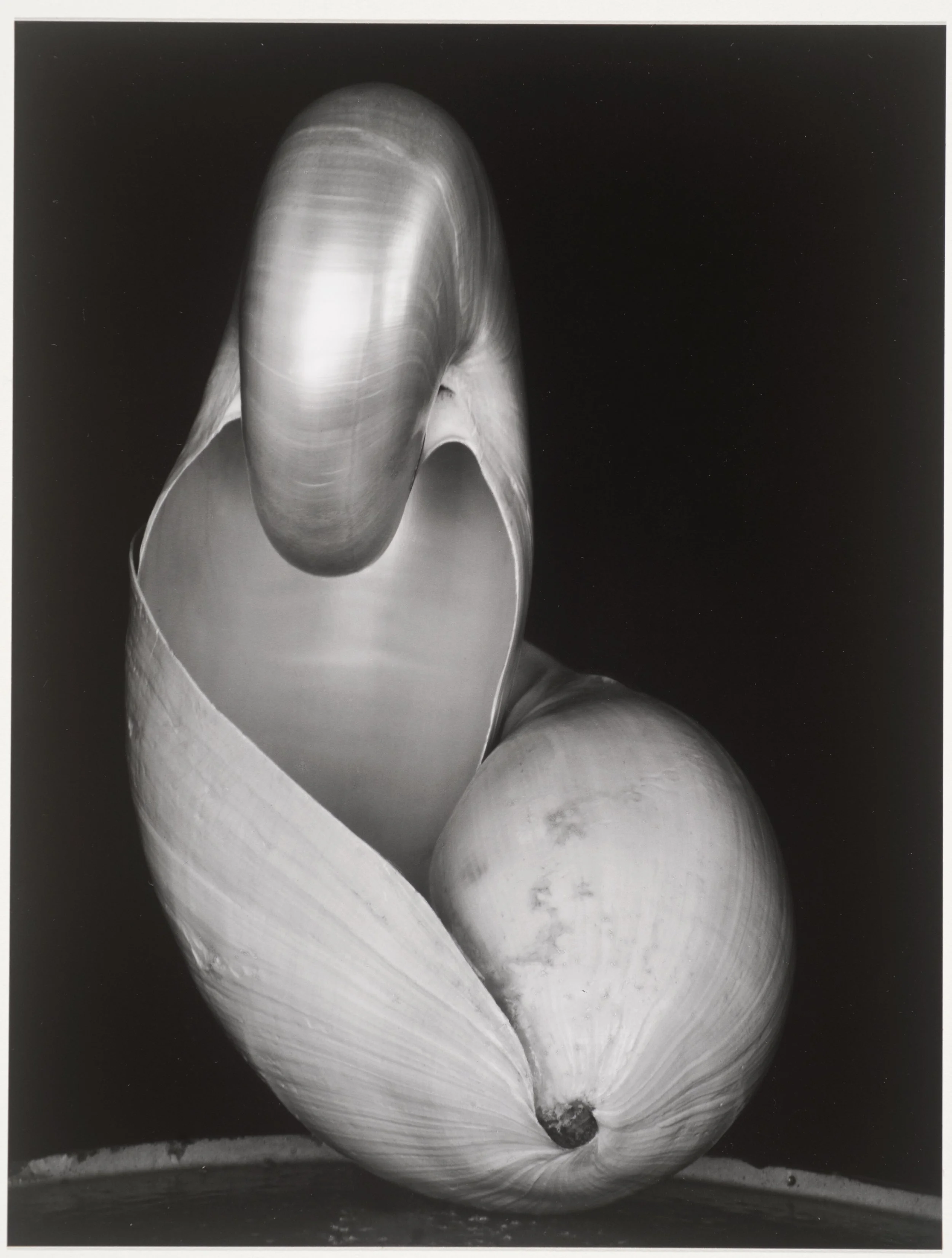
Edward Weston, Shells, 1927. Tate. All rights reserved, DACS 2026. Courtesy Tate.
Light and Magic The Birth of Art Photography, Tate Modern, Until 21 February 2027.
With Thanks to Perry Stewart and Joanna Sandler.