
Galeria Vermelho, São Paulo.
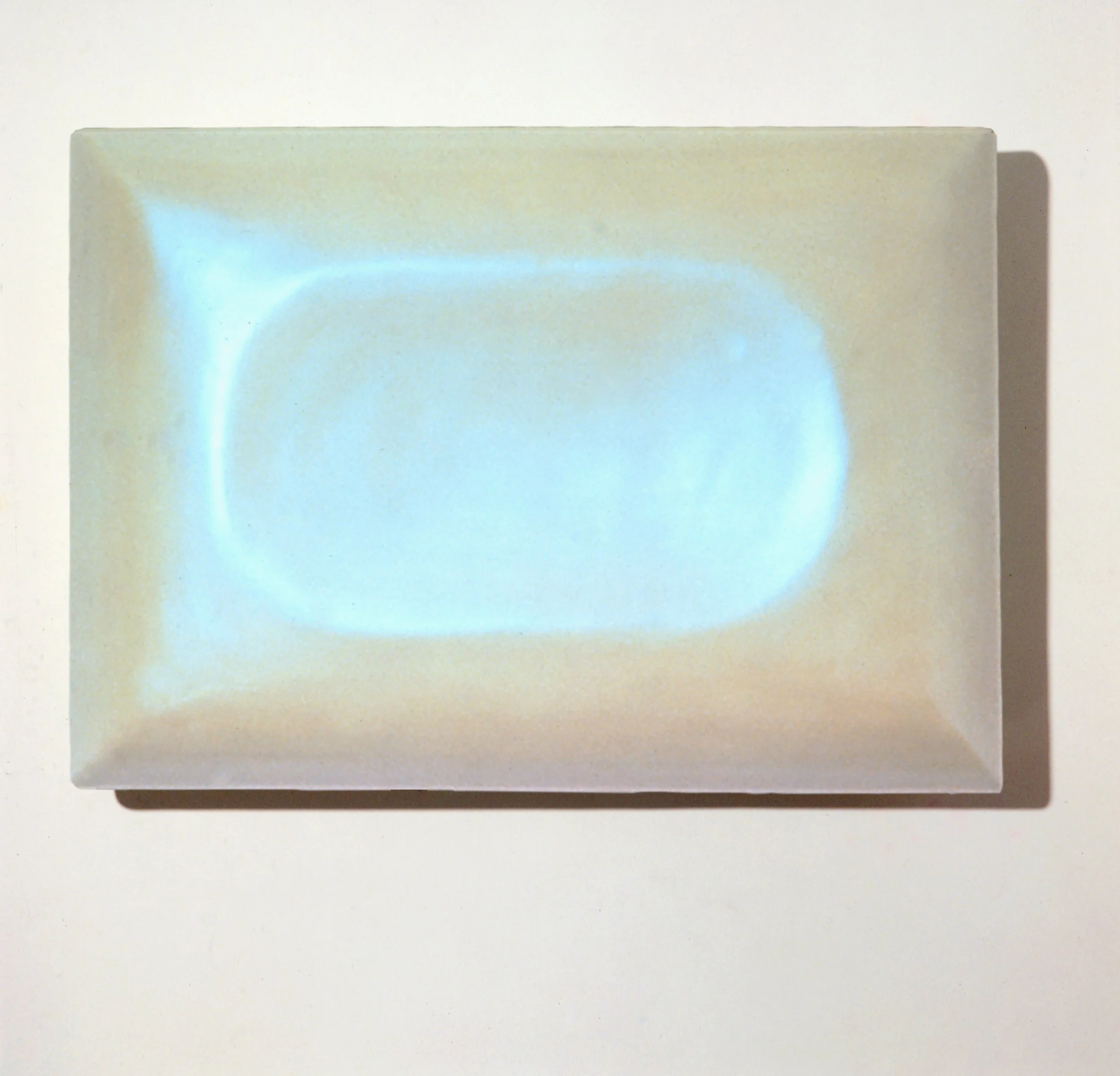
Edgard de Souza, Travesseiro (Pillow), 1991, Lacquered wood, 80 x 110 x 27 cm. Courtesy of the artist and Galeria Vermelho.
‘I think it is time for a rupture to establish a new order, a new way to relate to art and to life…’ Edgard de Souza.
There are certain historical contexts to your works, which are fascinating. How materials actively seem to resist categorisation, which feels like punk energy, and ultimately speak of freedom. Of amorphous, undulations of bodies in bronze appearing to be within a process of melding within a reflection, of textures of fur which blur information which seems predatory and in drawings which push the surface into another space - of saturation... Please can you contemplate your relationship with materials within your practice?
My first approach to materials is always functional; I mean that the project will determine what material should be used. Eventually the scraps will suggest new ideas, for instance the cow hide was first used for the upholstery of animal like furniture objects, then the first vessels were made from the scraps ( i try to be respectful to the animal skin and try to use the most of it), then I noticed the branding on these cow hides which led me to the "Fake Spot" series. I started to photograph myself to serve as studies and references to the bronze figures, but then I printed some of these images as finished works. So materials are chosen to serve a purpose; they are not the starting point. I love oil paints, but the last time I had a project to use them was in 1994.
The sense of time within your work is very specific - the often immediate feeling of provocation and the slower, more restful sense of classical beauty which sustains memory. What is your relationship with time, and how does it affect your choices as an artist?
Time is a problem. One artist living under the capitalist system has to produce a lot, network a lot, exhibit a lot, fast, fast, fast. I don't do any of these things, I work slowly and procrastinate a lot. This condition always caused me immense anxiety and I needed to grow old before I could feel completely comfortable about it. So even against all odds I always chose to stay true to the work, even at a loss. I try to not rush with the work, I don't commit to an exhibition if I have nothing, I don't adjust my speech to meet curatorial trends. At this point, I feel lucky enough to survive just by keeping a certain positive reputation without pursuing career anymore.
There is a certain sense of volumes of vessels which are presented as measures, of containers which consistently appear empty and yet appear specific in scale and form - what do you return to measure?
The scale of the vessels is determined by the size of the skin, or what was left of it. I see them as hollow bodies, as mummies, that could contain a soul or some kind of spirit, something which is not measurable. Of course, one could have a more sexual interpretation of these vessels - then we could talk about sizes and loads... I do 'play' with scale regarding the bronze figures; they are smaller than life size, but it tricks our eyes depending on how and where they are installed, sometimes they look bigger, sometimes smaller than they actually are.
Observing your works, there is a specific sense of order and of re- organisation of values which shift from an expected reality. Both in terms of how works are positioned and also in terms of the materiality of their realisation. Please can you contemplate the sense of order within your practice?
Maybe this organisation and reorganisation of values, which shift from an expected reality, as you put it, reflects the attempt to introduce subliminal messages into the work; of course, that will function depending much on the viewer's background. Like taking a sexual or even a violent subject and materialising it as a cute and polished object helps to introduce these themes into conservative collections, that amuses me.
I am not sure if metaphors and subliminal messages still make sense in a world where corporate media is causing collective cognitive dissonance. So lately I've been carrying this feeling of uselessness on trying to order or re-order things, I think it is time for a rupture to establish a new order, a new way to relate to art and to life, other than the 'market', but it is still what we've got and have to deal with.
Edgard de Souza is a contributor to M-A (A SPACE BETWEEN) issue 5. The complete interview and image series will be published within the issue, which will be presented in the autumn of 2026.
With thanks to Marcos Gallon.